MVP Demo: StarMiners
- Genre: Co-op Space Mining Adventure
- Type: MVP Project
- Engine: Unreal Engine 5
- Role: Game/Level/Narrative Designer
Overview
Star Miners is a 45-day MVP developed by a volunteer team of industry veterans and juniors, best described as “Dave the Diver meets Deep Rock Galactic.” The project is defined by two key elements:
A cozy, co-op space mining adventure focused on combat-free resource gathering.
A central narrative HUB inspired by the satirical and absurd humor of Futurama.
Working with industry veterans on this project was a critical learning experience. It was my opportunity to apply my game design skills in a real-world setting, gaining direct mentorship on how to collaborate within a professional production pipeline.
Responsabilities
Working within a small, agile development team required versatility and a willingness to step beyond a traditional design role. As one of the game designers, I embraced wearing multiple hats, adapting quickly to learn new skills and contribute wherever needed to ensure the project’s success.
Level Design (Bar): Designed the layout and flow of the bar level, organizing the space to guide the player through key narrative interactions and ensuring the environment functioned as a living, interactive social HUB.
Narrative & Dialogue Design (Bar): Wrote and implemented all main quest dialogue within the bar, establishing the personalities and Futurama-inspired comedic tone for key NPCs like the robotic Bartender and the rival, “Big Dan”.
Game Design: Spearheaded the foundational design, authoring the full Game Design Document to establish the game’s core loops and systems.
Blueprint Scripting: Provided support by implementing simple Blueprint logic, helping to connect essential UI interactions and prototype simple mechanics for the space scene.
Highlights
Driftwood (Bar)
The game’s social anchor, designed to bridge high-tension expeditions with narrative downtime through a dense, atmosphere-first layout.
- Spatial Storytelling: Leveraged architectural framing and NPC placement to create an implicit social hierarchy, naturally guiding player attention to key narrative interactions without relying on UI markers.
Dialogue
Crafted the complete script and mission flow for the MVP, using tone as a primary engagement tool.
- Comedy as Onboarding: Designed the MVP quest line wrapped in a “Workplace Sci-Fi” satire. By writing character’s dialogue with a humorous, cynical edge, I turned the functional onboarding steps into an entertainment loop, ensuring players remained engaged while learning the core mechanics.
Case Study: Test Level
The Challenge
Context: This level design proposal and blockout were created as part of the technical assessment required to join the Star Miners development team.
Brief: Design a blockout for a 1-8 player social hub in a grungy, neon-lit sci-fi setting.
Requirements: Accommodate specific features (Bar, Dance Floor, Jukebox, Mini-games), support 8-player scaling, and integrate narrative elements.
Constraints: Adhere to provided Concept Art (rounded shapes, central bar) and create a functional loop for frequent player visits.
Core Concept
Instead of a static, fully-finished bar, I proposed a dynamic “Under Construction” concept (inspired by Dave the Diver). The Hub begins in a semi-destroyed state inside a hollowed-out asteroid.
Design Intent: This integrates the Hub into the core economy loop. Players aren’t just visiting; they are investing currency to repair the Hangar and expand the bar.
Narrative Hook: It creates immediate agency. The first quest isn’t just “go fetch,” it is “fix your home,” fostering a stronger emotional bond between the player and the space.
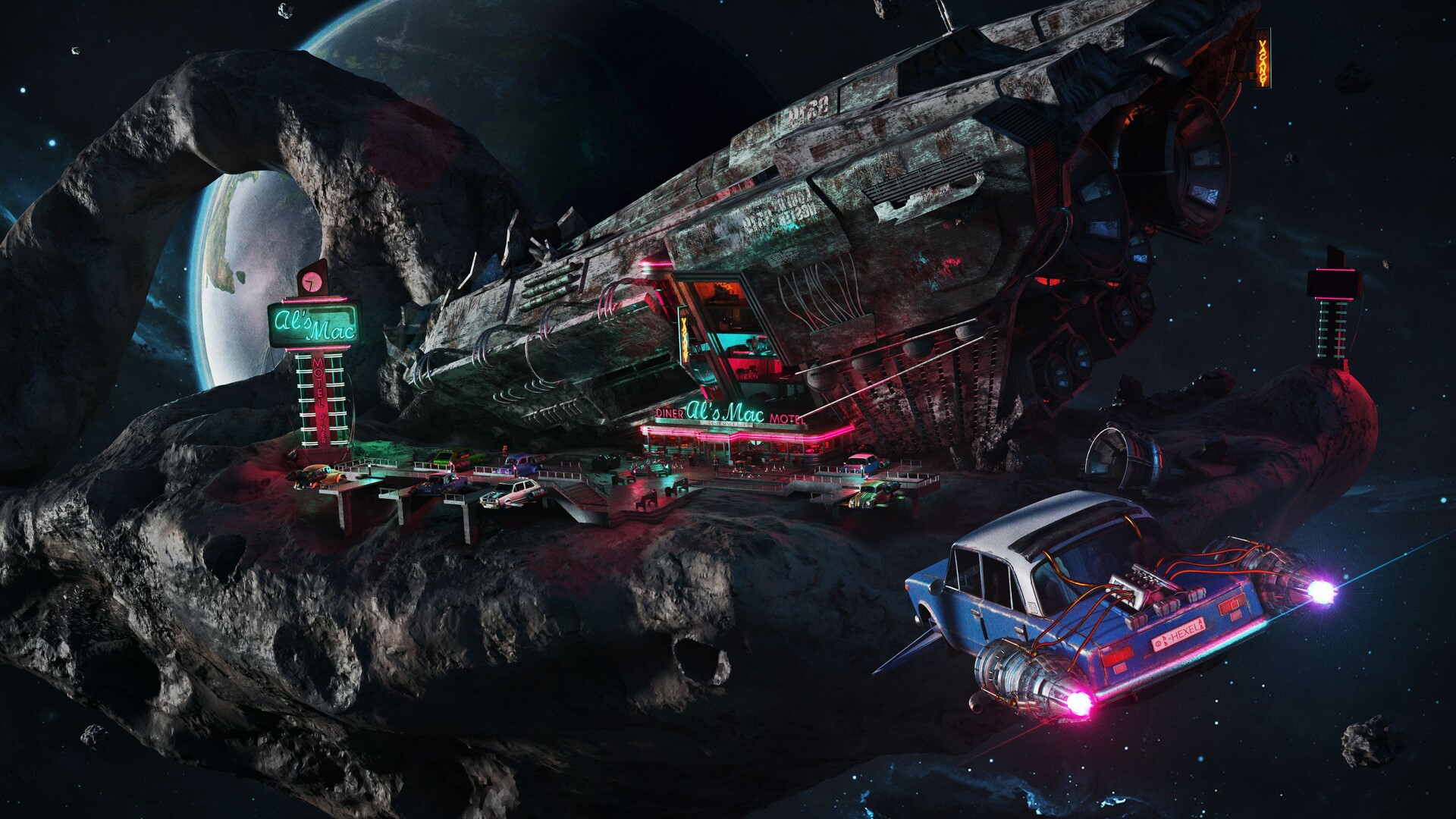
Concept Art Reference: Original artwork by Jakub Nowak.
Layout Strategy & Iteration
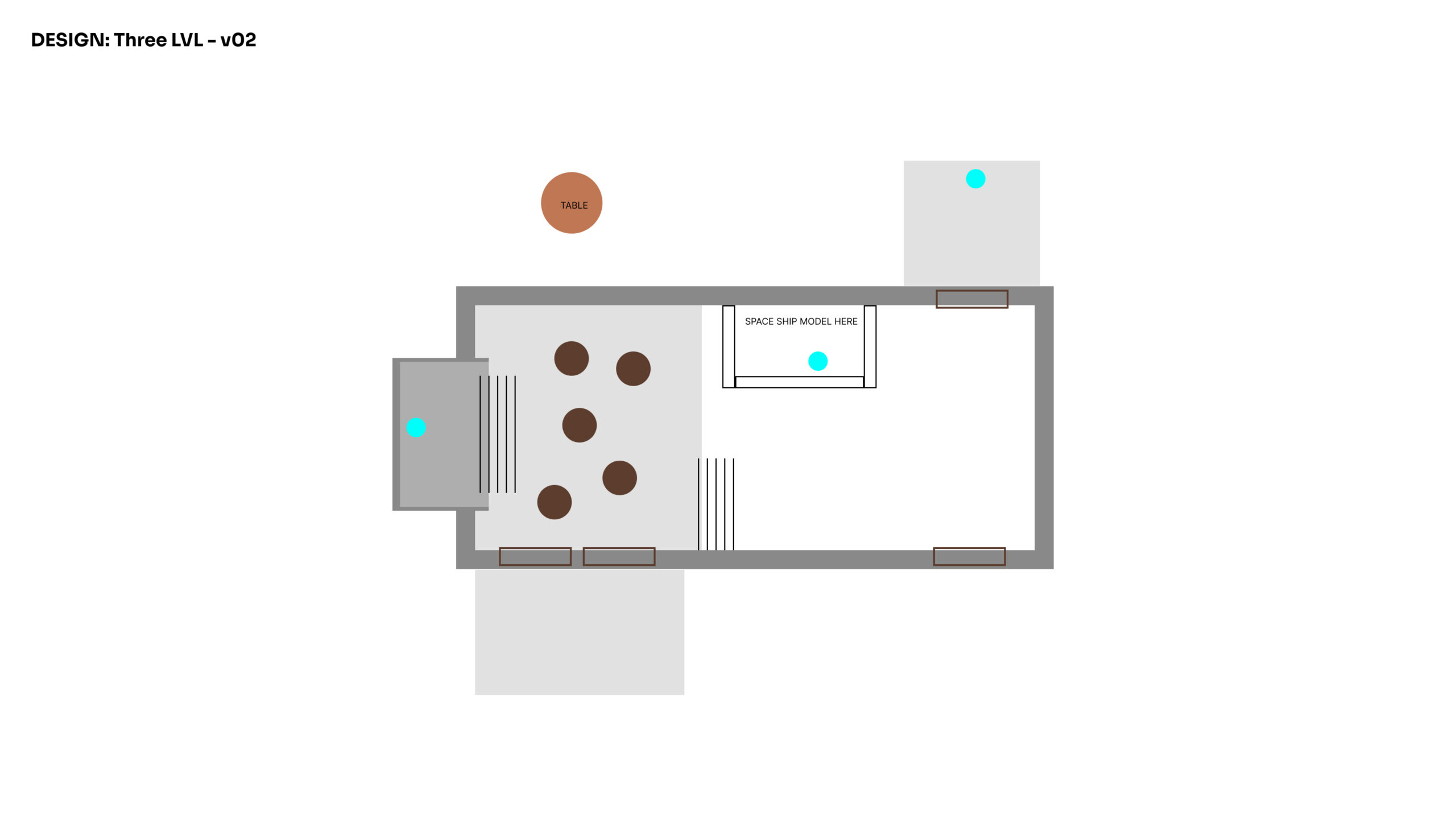
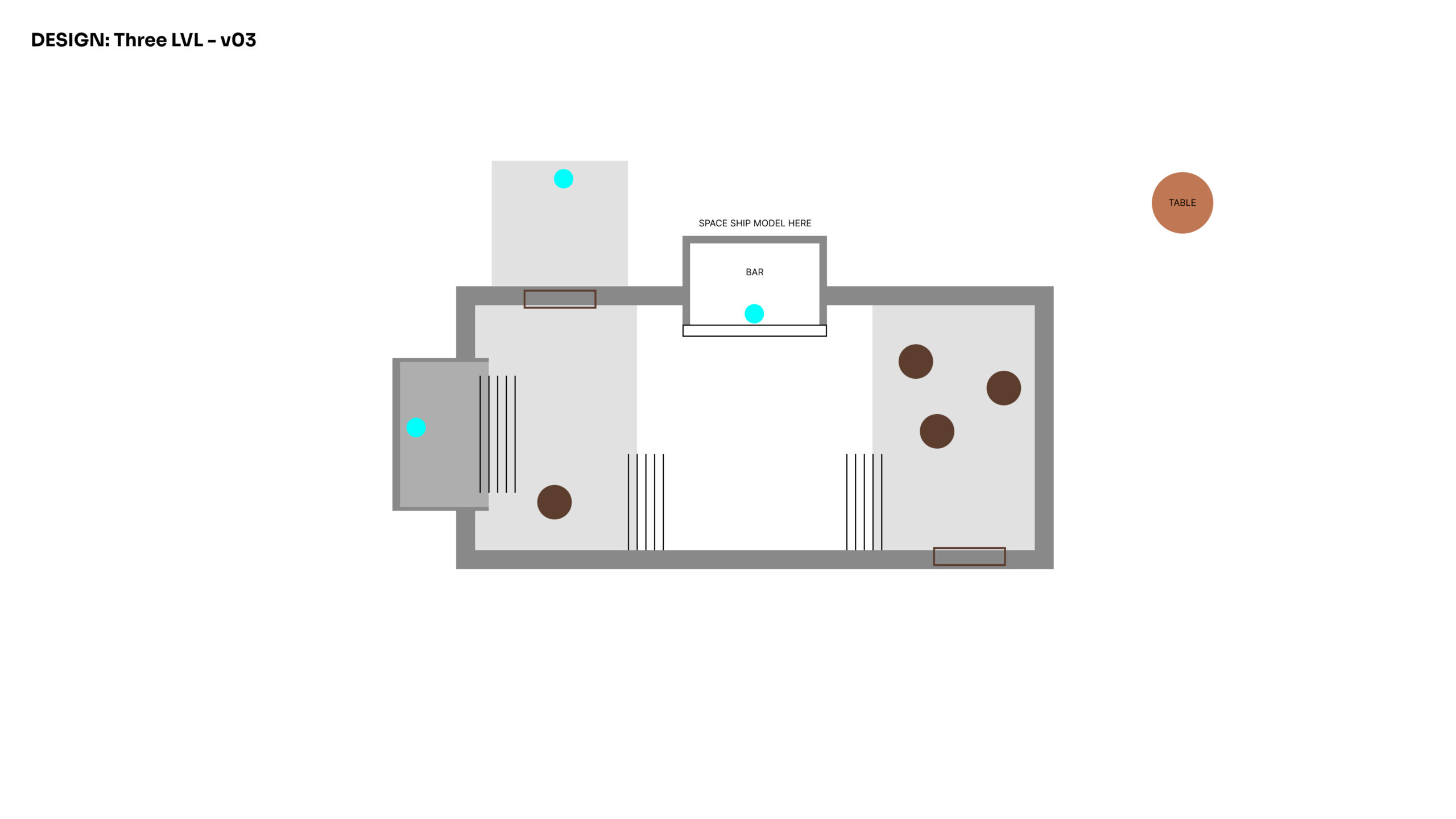
I initially considered a vertical layout (Ground Floor: Bar, Basement: Party, 1st Floor: Arcade).
Why it failed: It segmented the player base too much and increased friction. For a Hub that players visit hundreds of times, navigation must be frictionless. Forcing players to change floors just to find a merchant would become tedious.
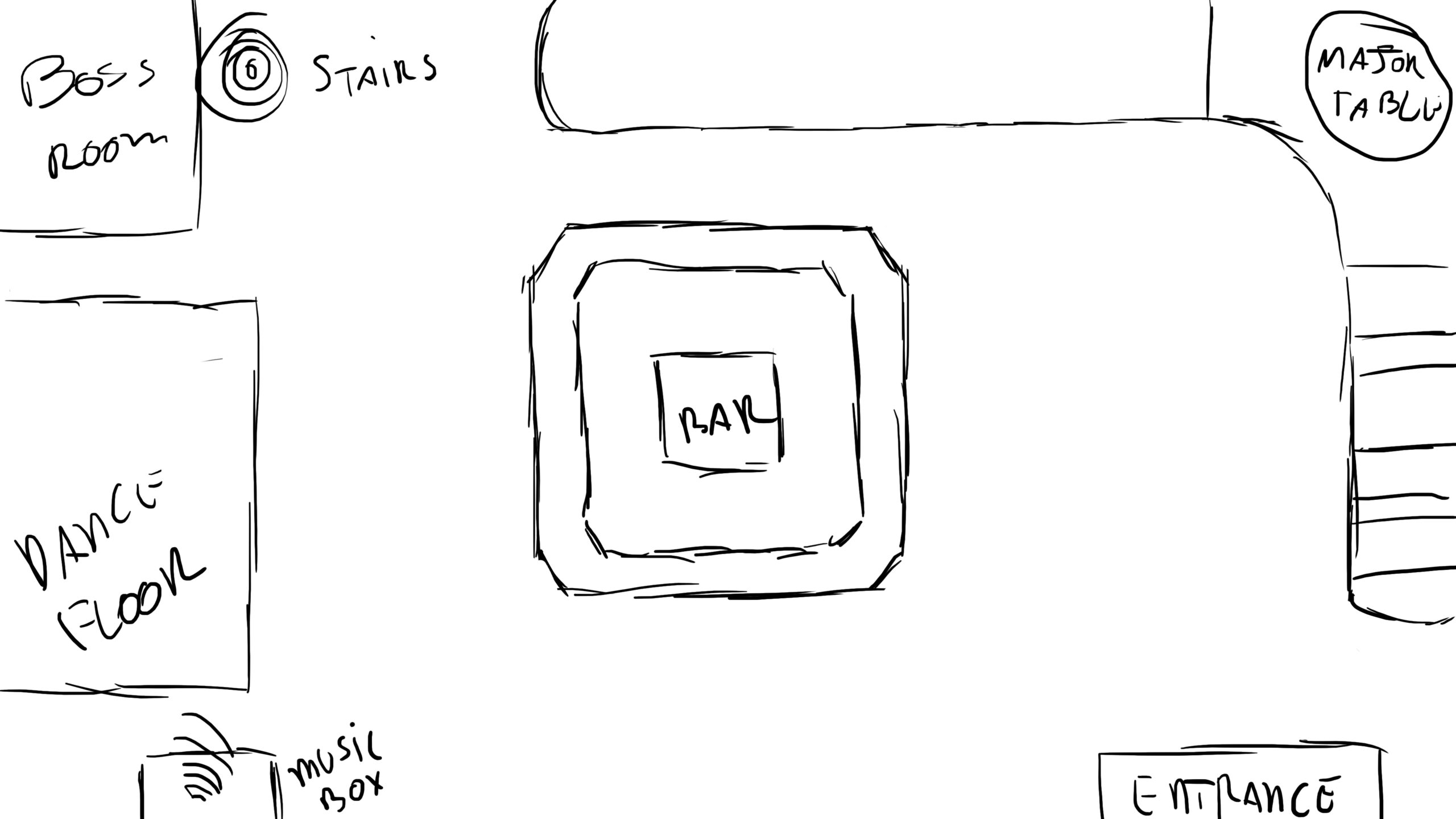
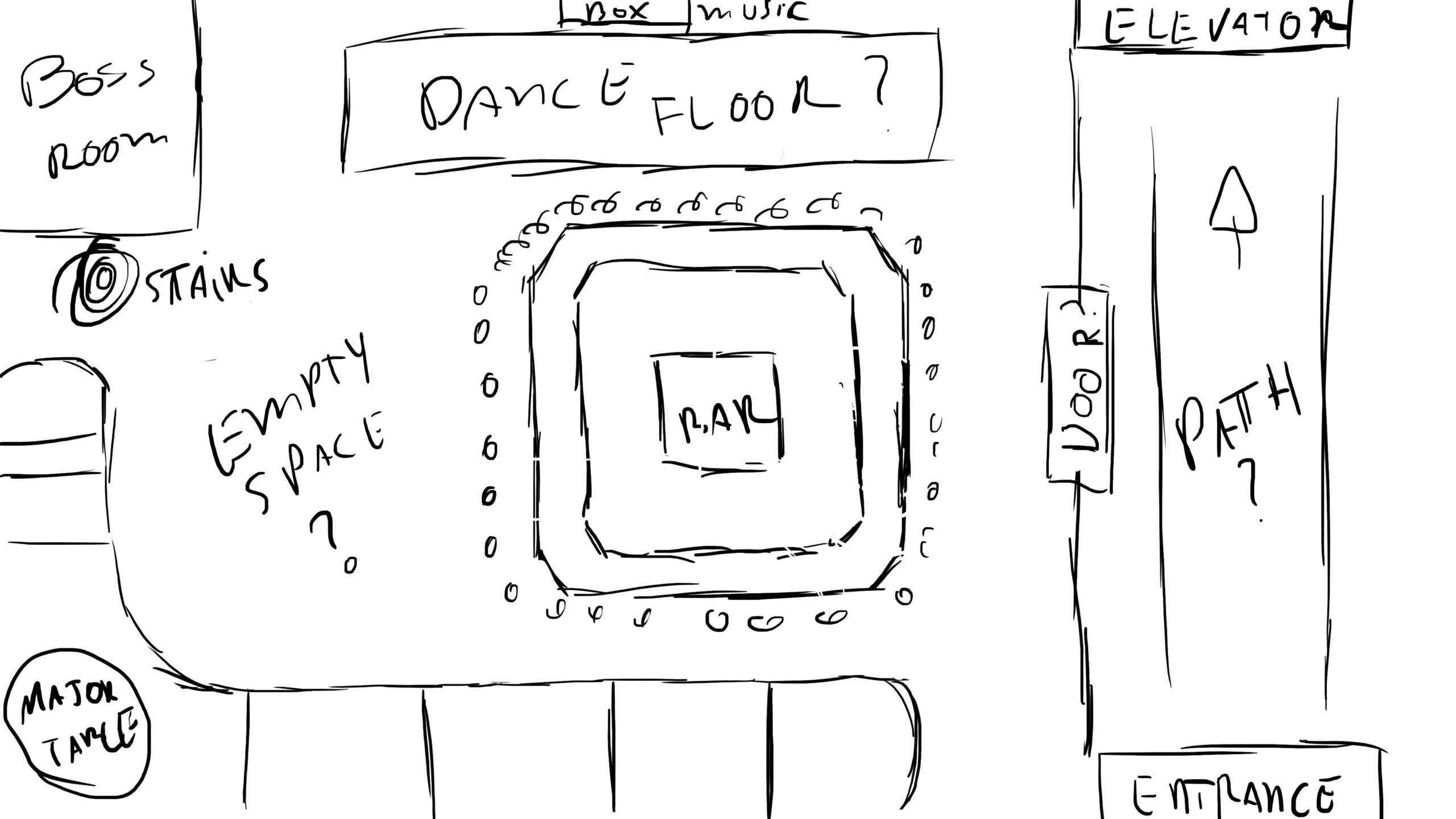
Selected Layout (The “Open Flow” Plan): I opted for a centralized, open-plan layout inside a crashed ship/asteroid.
Flow Philosophy: “Interaction-Oriented.” Key loop elements (Hangar -> Bar -> Boss -> Upgrade) are arranged to minimize travel time.
Scalability: Designated “Construction Zones” allow the geometry to expand visually as the player progresses, without cluttering the initial “Newbie” experience.
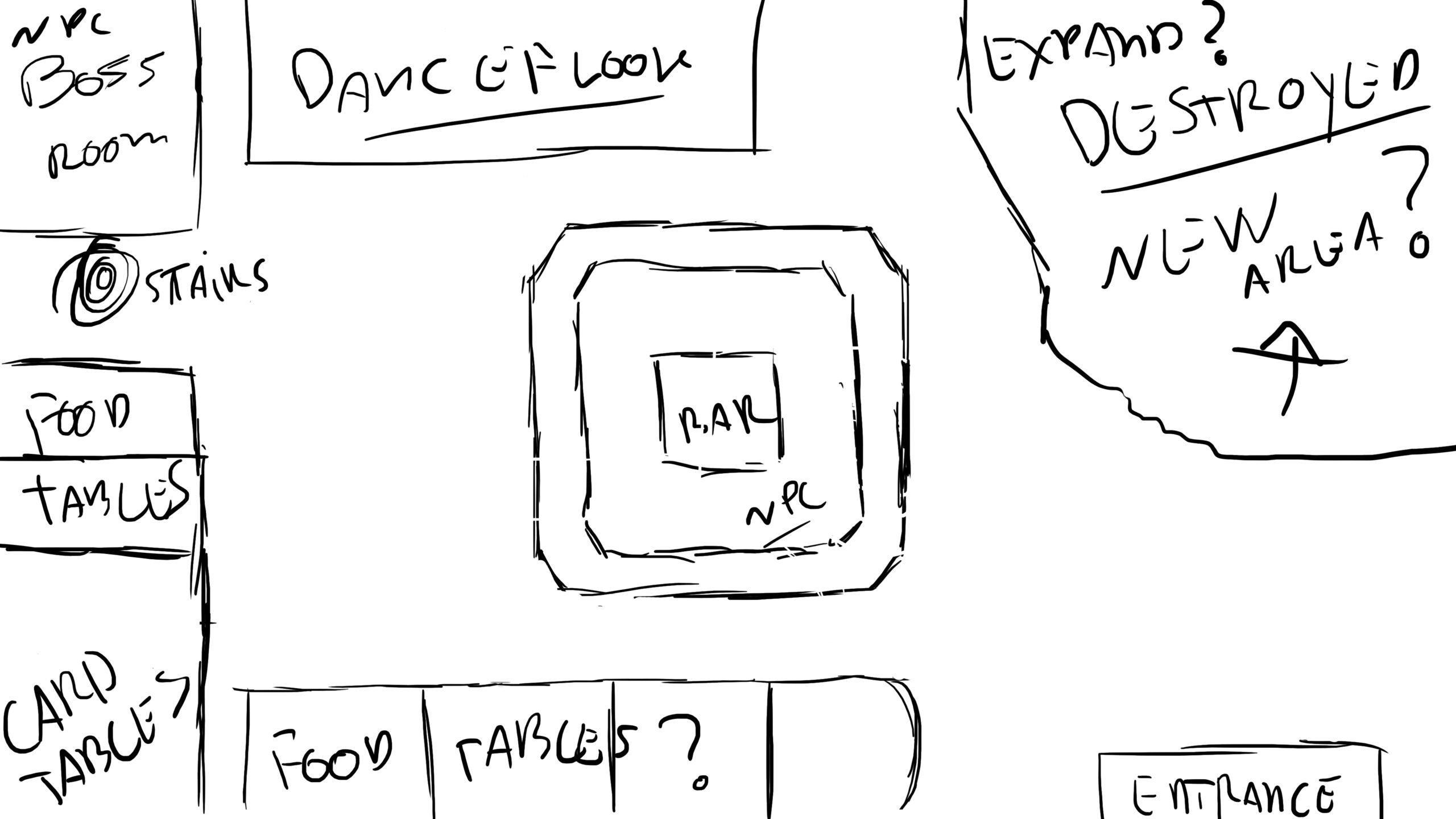
Blockout Decisions & Spatial Logic
A. Visual Hierarchy (The “Boss” Room)
Decision: I placed the Quest Giver/Boss in a glass room on the 2nd floor, overlooking the entire bar.
Rationale: This creates an immediate visual landmark. Even without a UI marker, a new player instinctively knows that the “important person” is the one supervising the area from above. It establishes authority and hierarchy through geometry.
B. The Central Bar (Adhering to Art Direction)
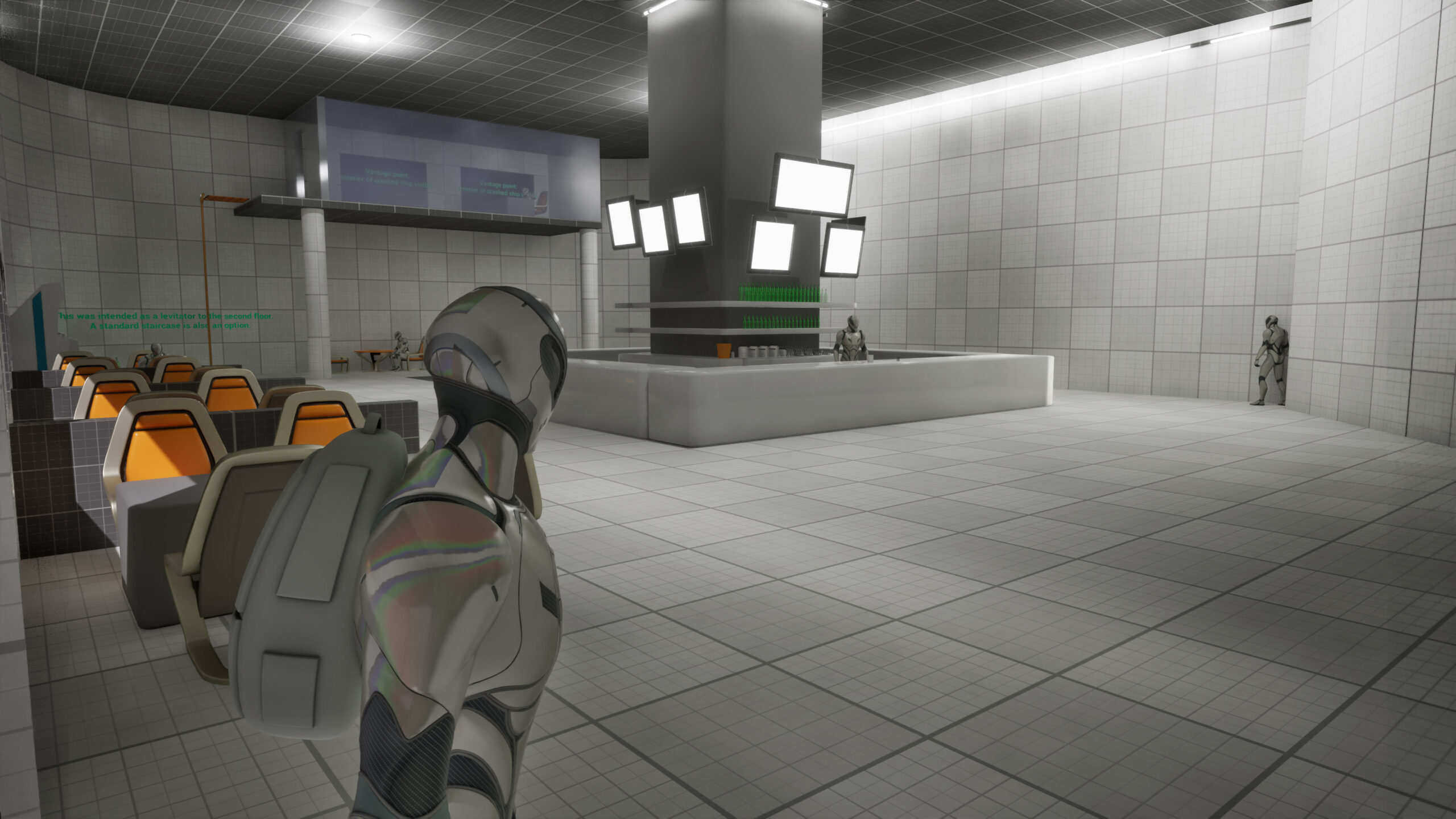
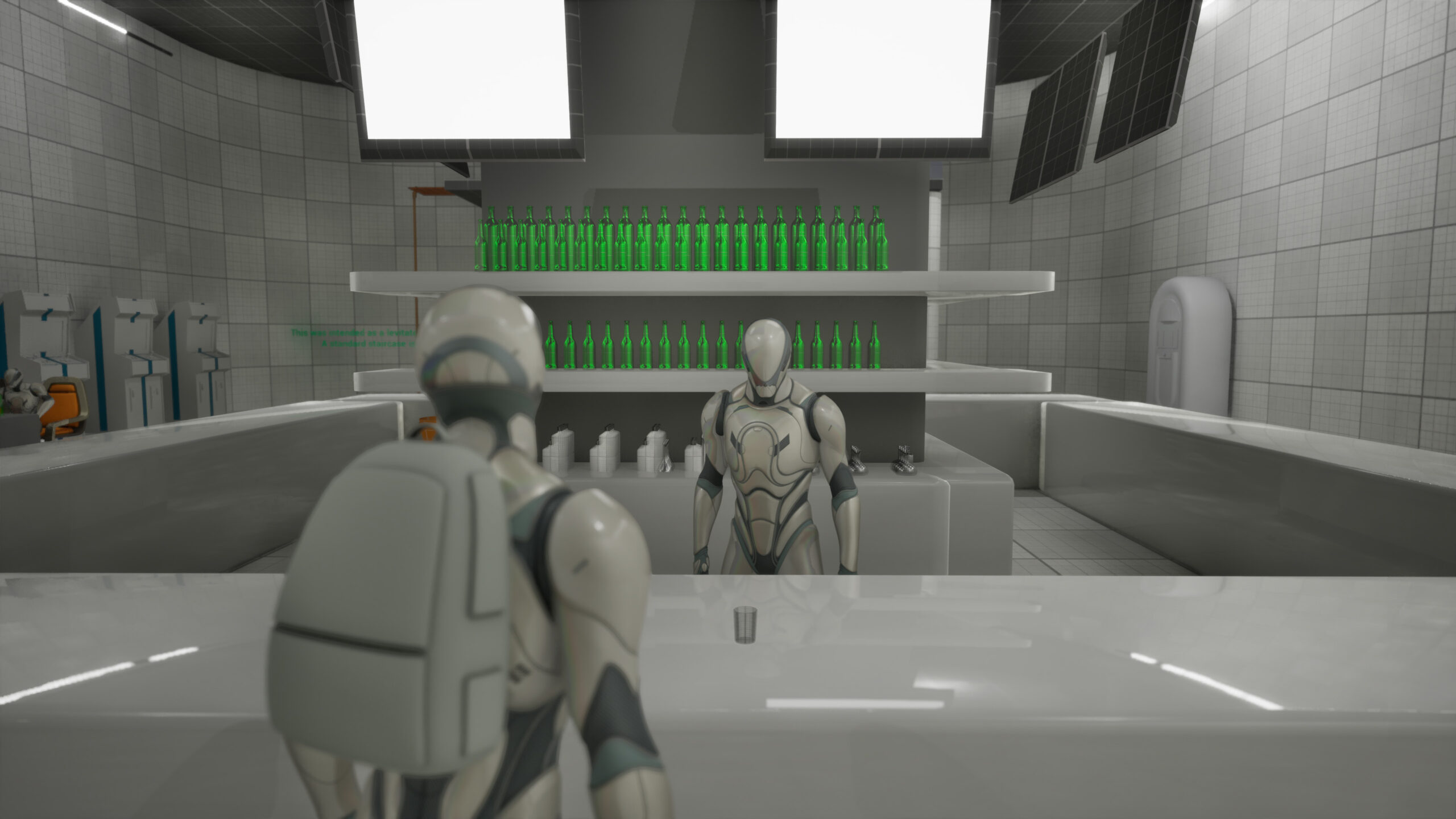
Decision: Kept the bar island in the center of the room.
Rationale: While a wall-bar creates more open space, the Concept Art dictated a central bar. I respected this constraint but ensured wide pathways around it to prevent player collision bottlenecks in an 8-player session.
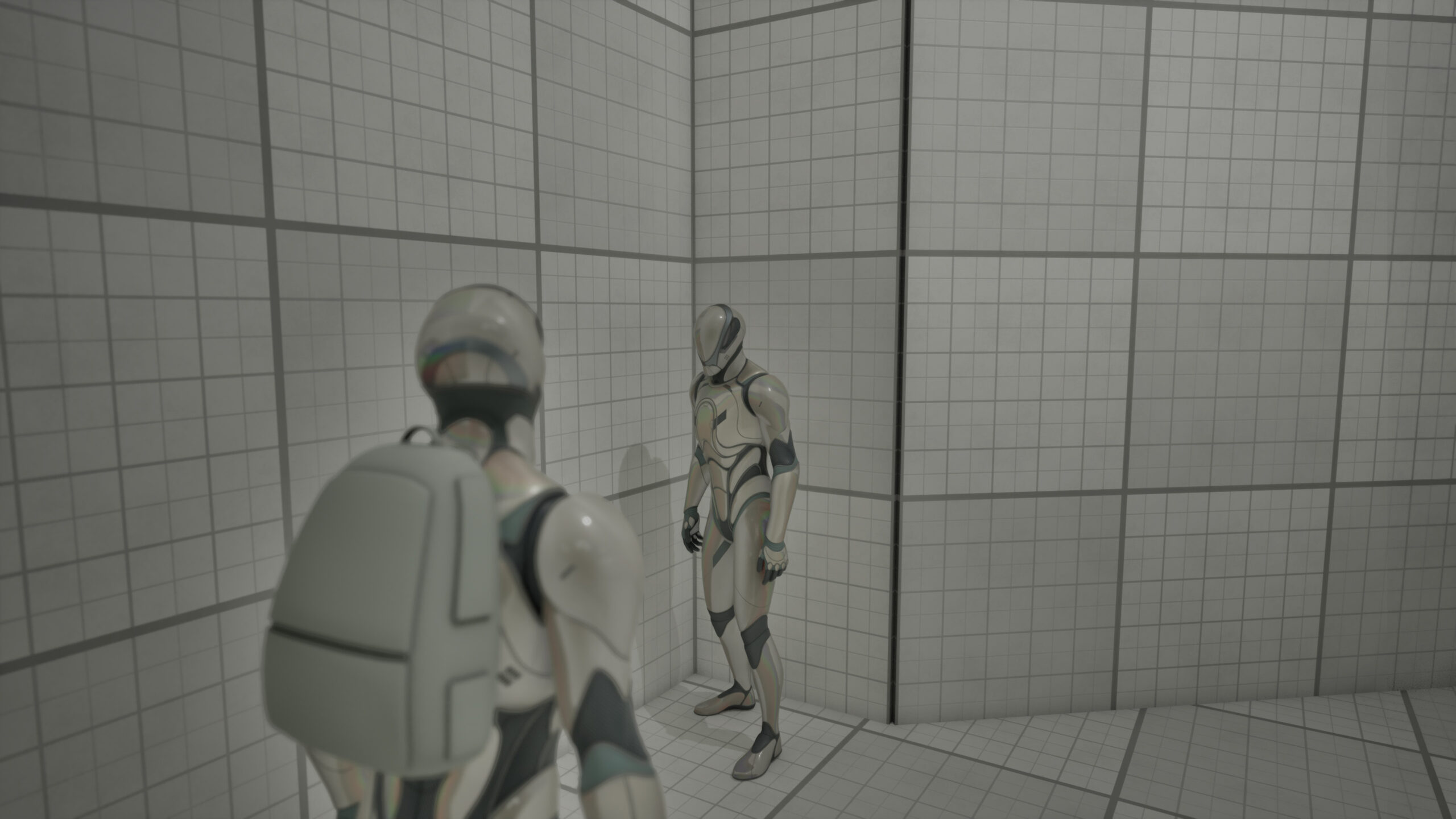
C. Narrative Placement
The Conspiracy Android: Placed in a dark corner, isolated from the main flow. (Fits the “paranoid” archetype).
The Drunk Miner: Seated by a window looking out at the void. (Reinforces the narrative of a “past-his-prime” veteran longing for the old days).
Detailed Explanations (Miro Board)
Case Study: MVP Level
From Prototype to MVP
Following the successful Level Design test, we transitioned the “Nebula Tap” into the official MVP production pipeline. This phase required adapting the initial concept to fit new design pillars and production realities.
Feedback & Direction Shift
Upon reviewing the initial blockout, the direction for the Hub evolved significantly:
The “Dive Bar” Aesthetic: The style needed to shift from a “clean” sci-fi look to a grittier, “lived-in” atmosphere.
Mechanic Pivot: The “reconstruction” meta-game (inspired by Dave the Diver) was cut to focus on the core loop. This meant the bar no longer needed to appear “under construction.”
Scope Focus: To prioritize the interior social experience, the exterior “parking/docking” area was removed from the MVP scope.
The Scoping Challenge: Finding the Right Size
We initially experimented with scaling the bar up by ~40% to accommodate the 8-player requirement. However, this introduced new problems:
Art Production Risk: A larger space exponentially increased the workload for the Environment Art team, threatening the MVP timeline.
Atmosphere: The larger space felt empty and lost the cozy “dive bar” style we wanted.
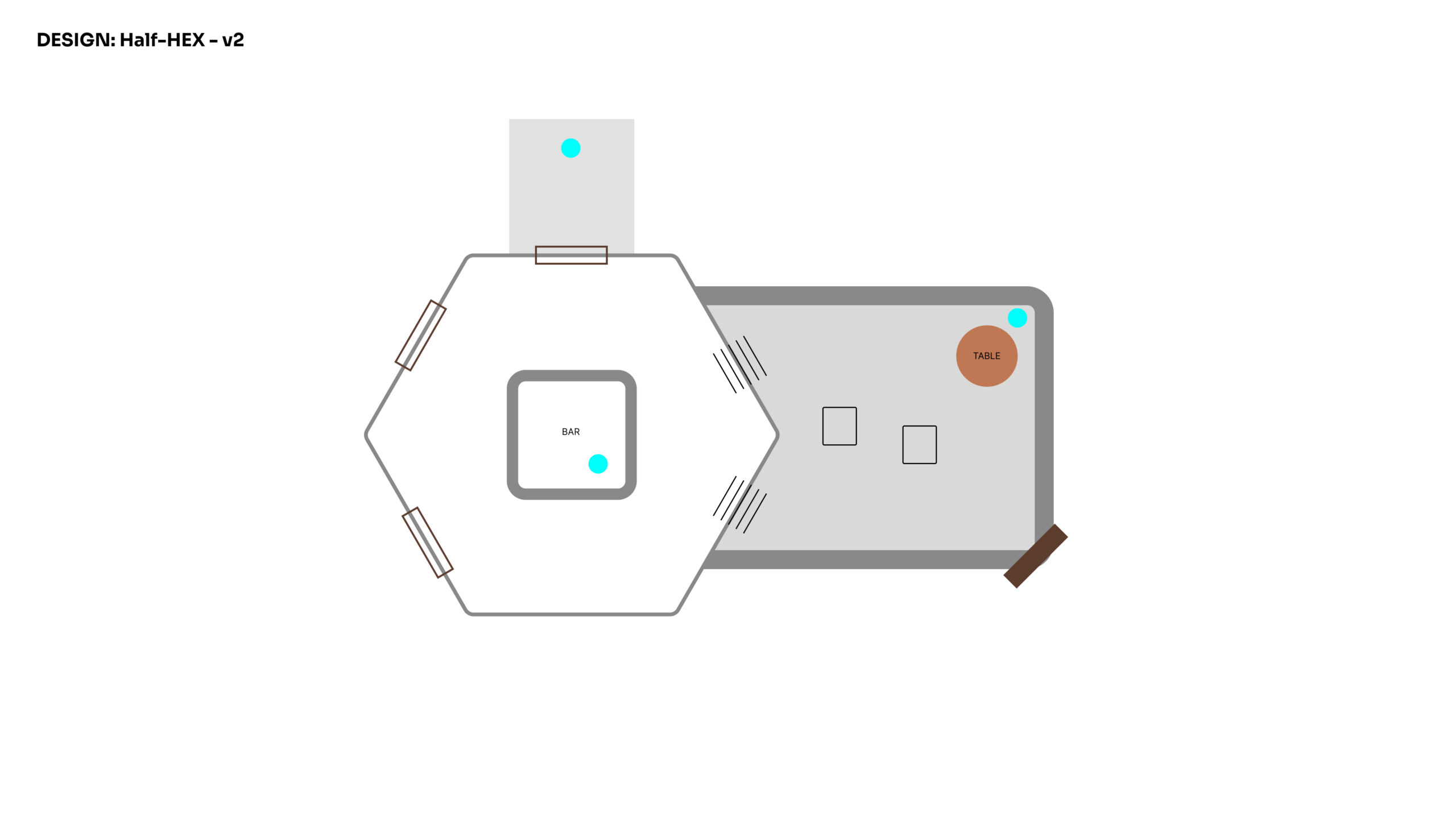
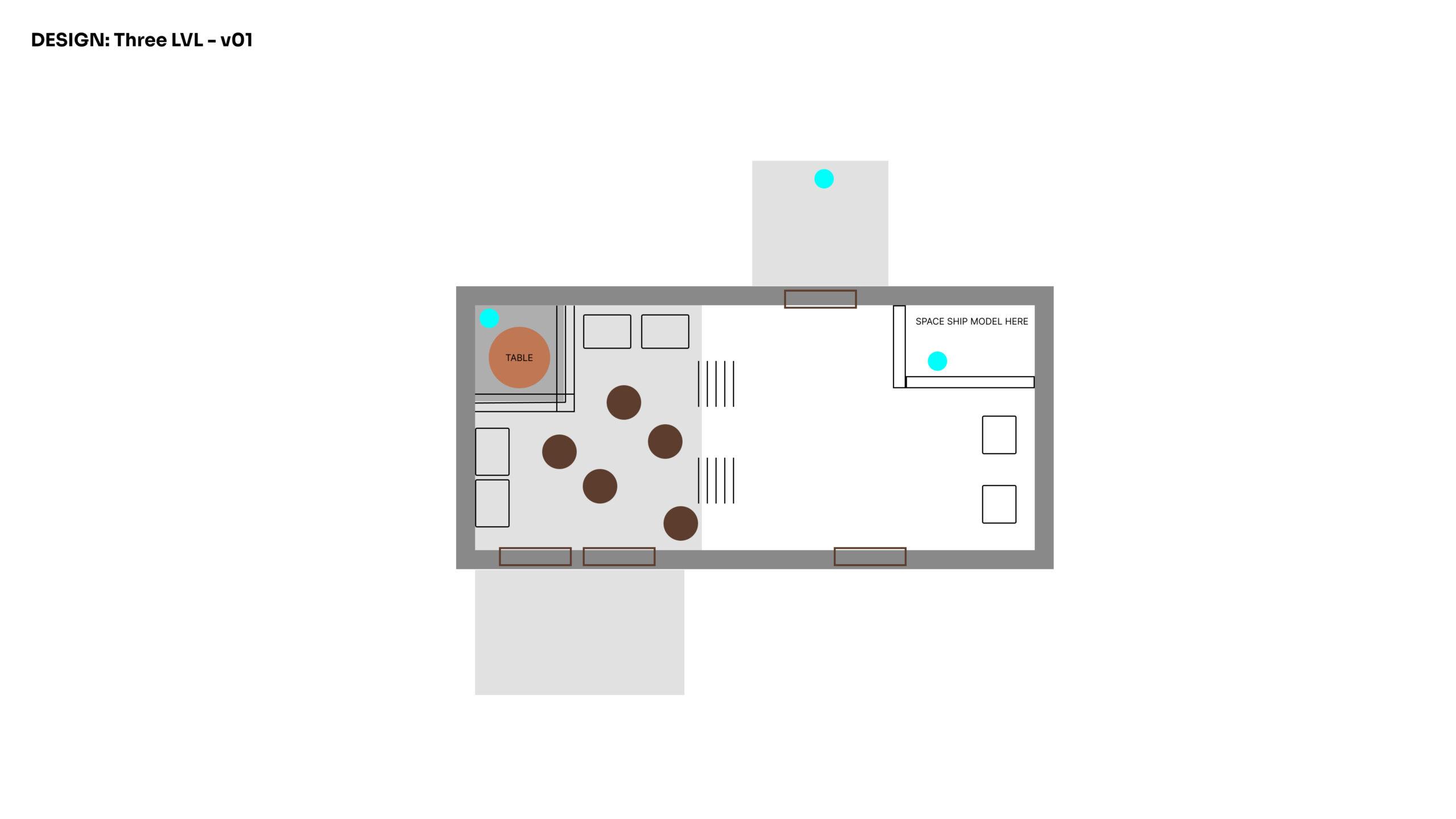
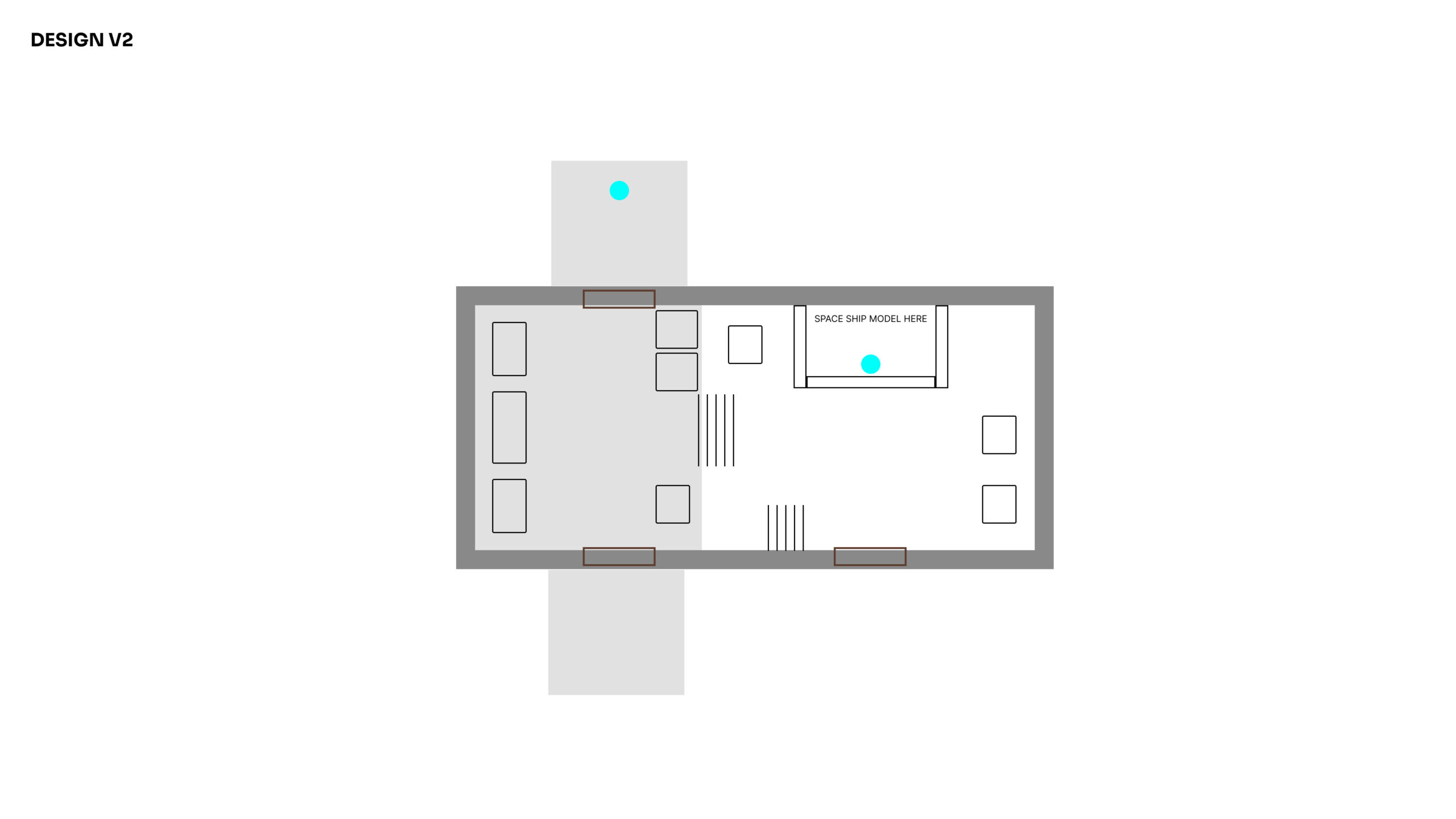
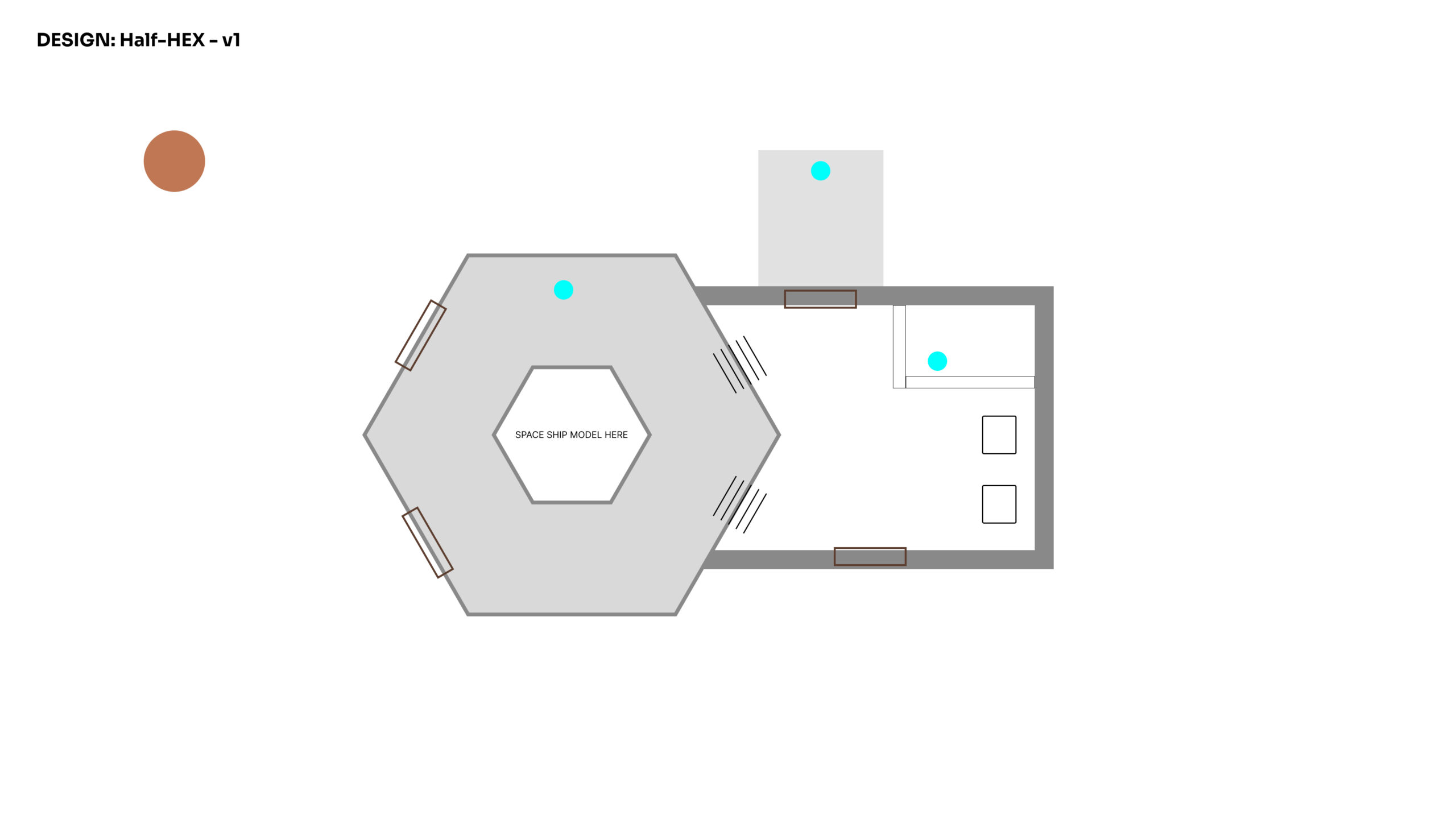
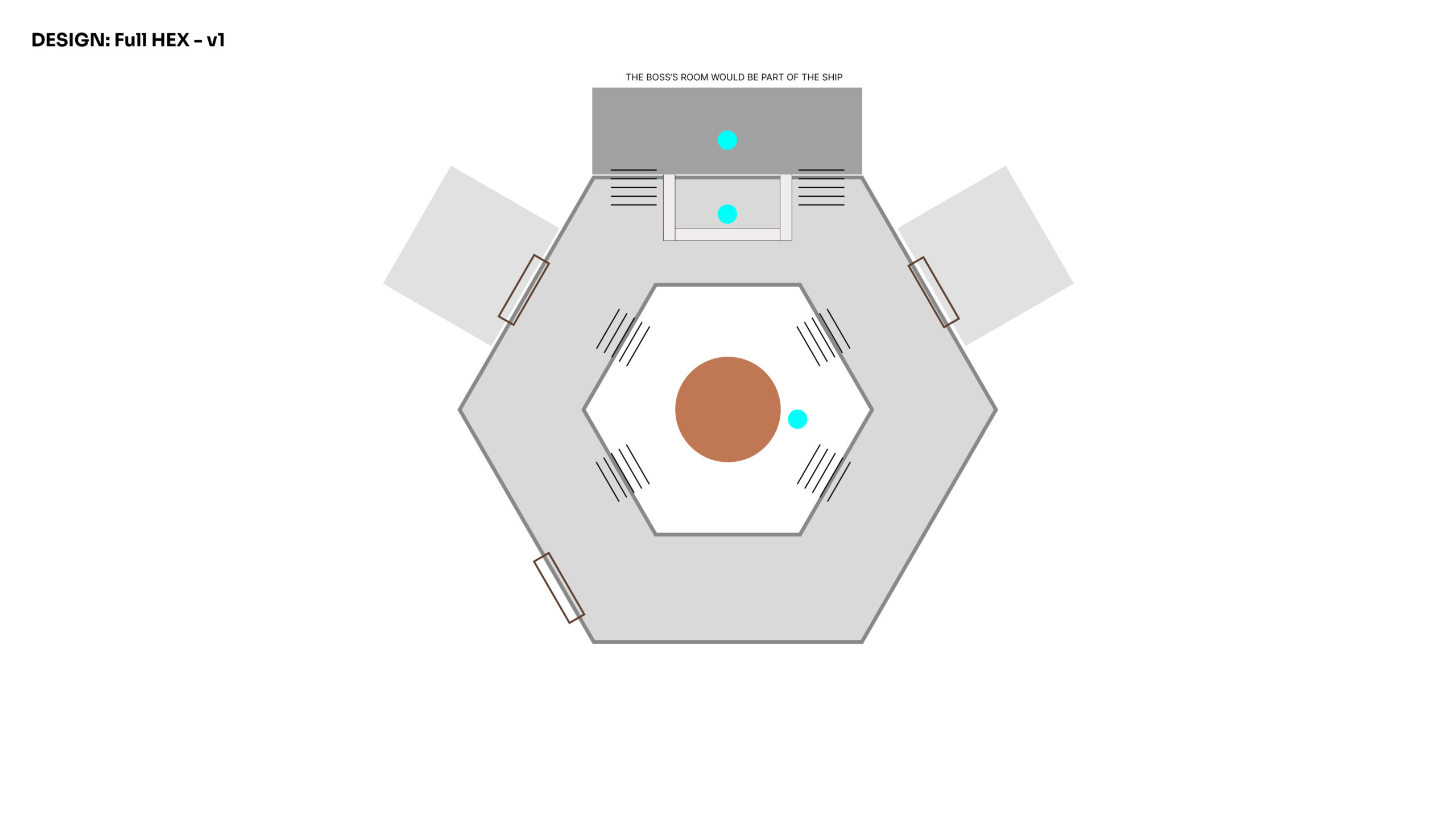
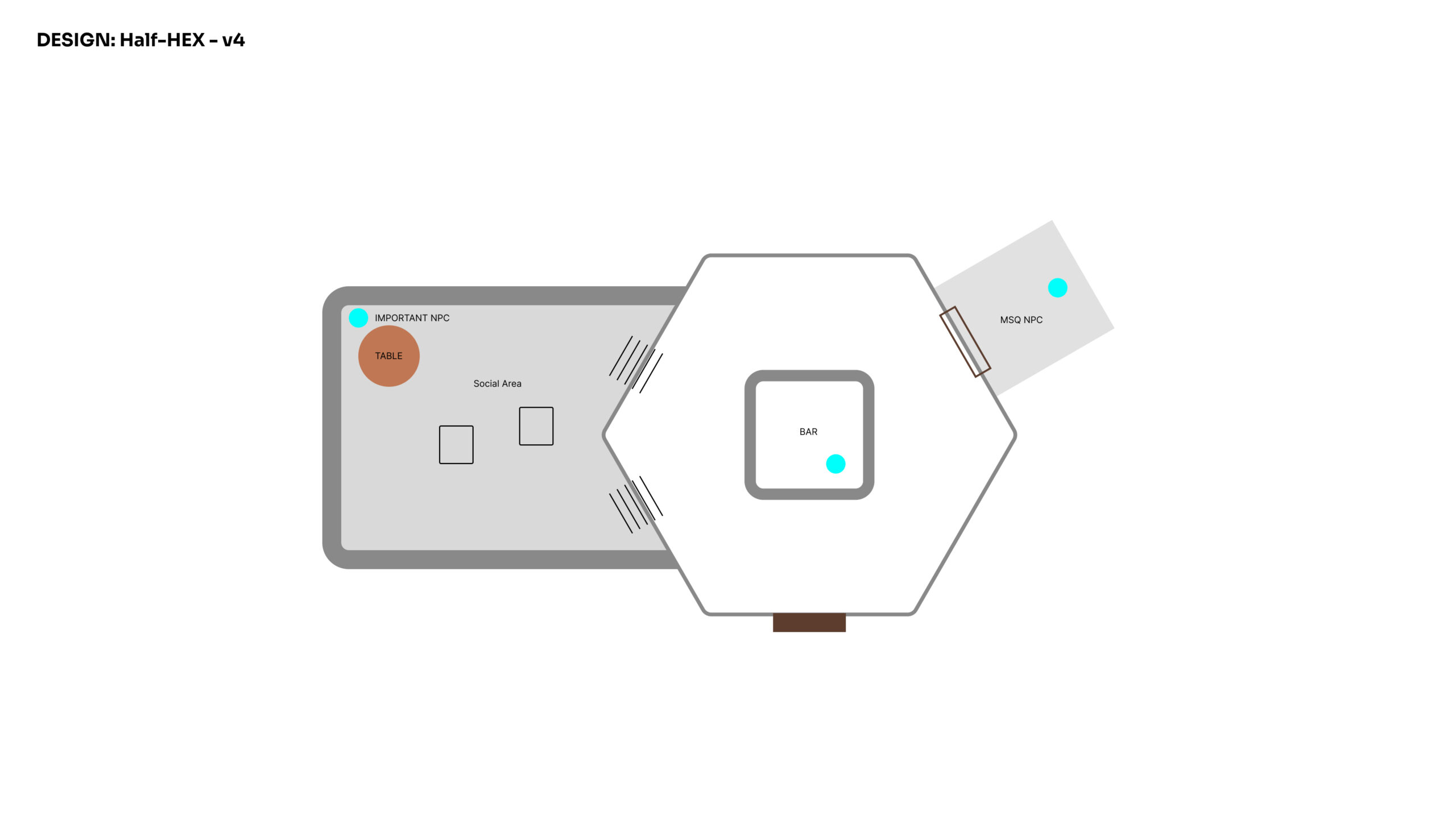
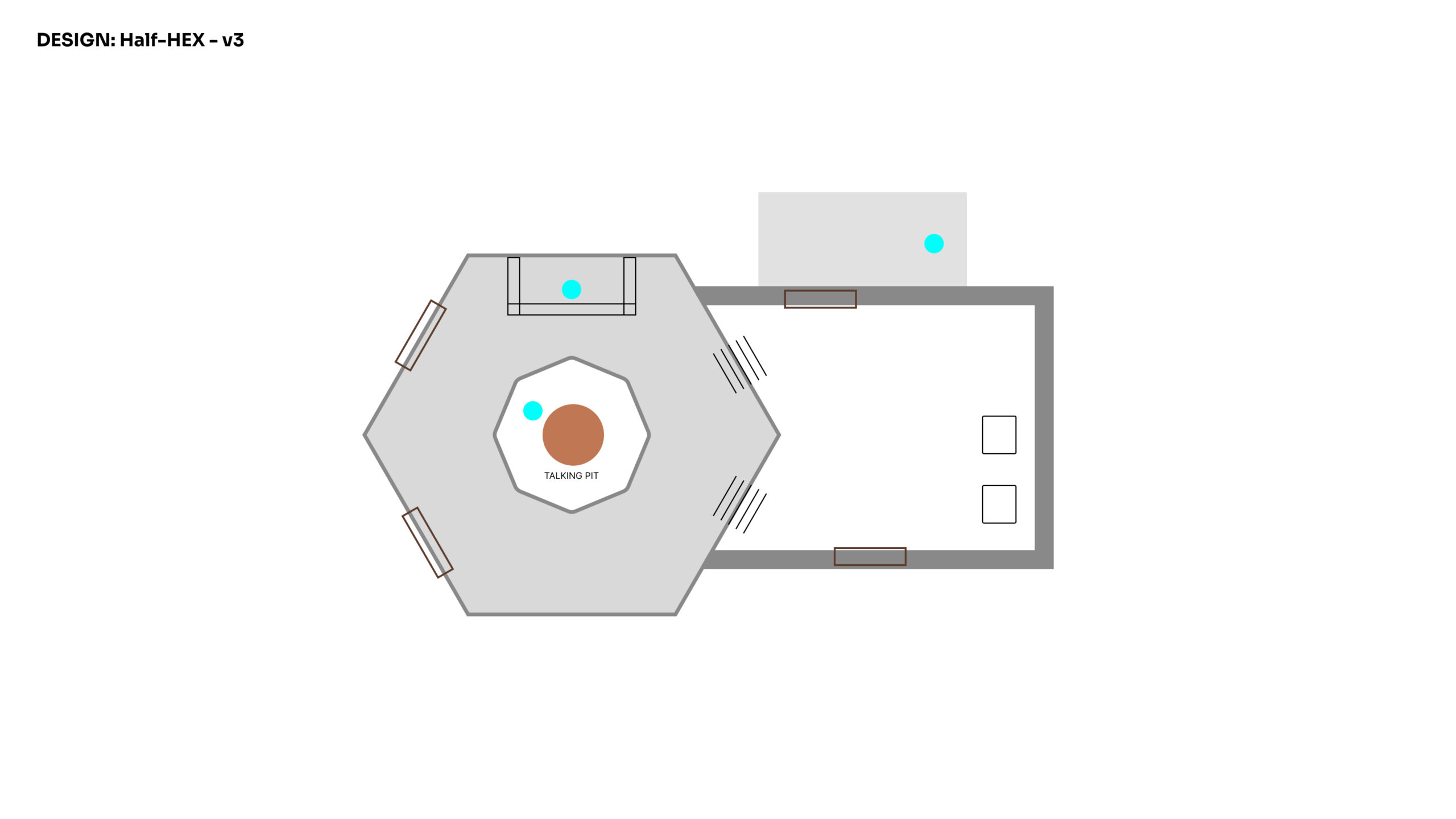
The Solution: We agreed that a smaller, denser space would be better for both the schedule and the game feel. I developed multiple layout variations with different geometries to find a footprint that felt spacious enough but manageable for the Art team.
Final 2D Layout
To secure the “Dive Bar” atmosphere, we cut the exterior to focus strictly on a compact, two-story interior.
Narrative Hook: The second floor is visible but inaccessible, creating mystery for future content while saving immediate production scope.
Optimized Flow: The squared layout perfectly accommodates the MVP quest loop without feeling empty or oversized.

Key NPC Placement
The Bartender (The Anchor):
Placement: Centrally located and framed by the architecture.
Intent: Upon entering, the player’s eye is immediately drawn to the Bartender, establishing them as the primary interaction point for quests and lore.
“Big Dan” (The Power Figure):
Placement: Occupying the central table in the seating area.
Intent: By placing him in the most prominent spot of the “social zone,” we visually communicate his importance and dominance in the local hierarchy. He physically “owns” the room.
The Enigma Woman (The Mystery):
Placement: Seated at the bar, adjacent to the Bartender’s interaction point.
Intent: She is placed in high-traffic view but remains non-interactable. This proximity ensures players see her frequently, building curiosity about her role before her narrative arc begins.